ISS ≠ Cybersecurity: Why Confusing the Two Leaves You Exposed
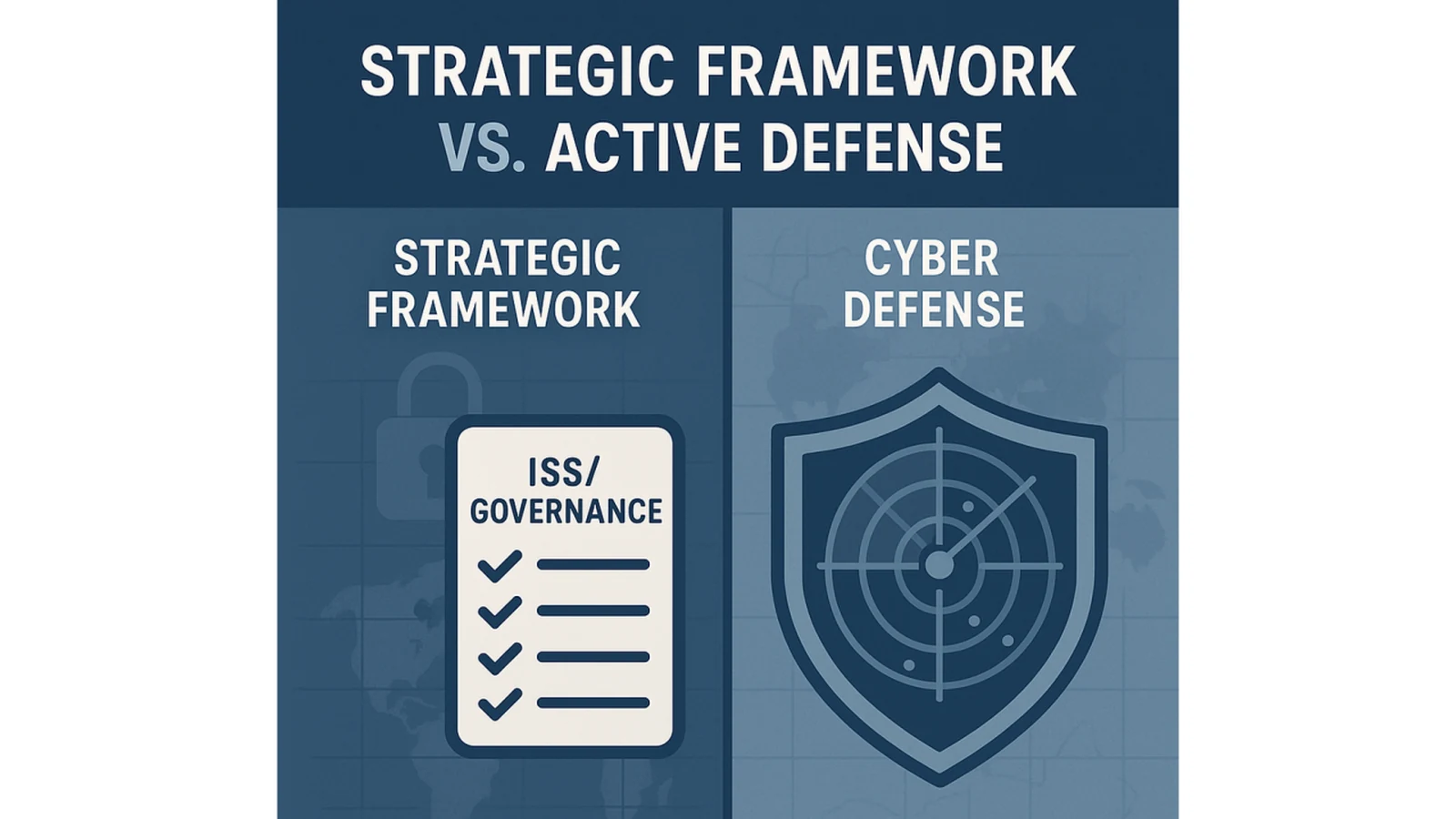
This article continues the reflection initiated in our previous post on digital exposure. Here, we explore a common misconception: believing that having an ISS framework equals having cybersecurity.
One of the most common mistakes organizations make is treating Information Systems Security (ISS) and cybersecurity as interchangeable. While they are closely linked, they serve distinct purposes, and failing to differentiate them can leave serious gaps in your overall security posture.
ISS: Strategic Governance and Risk Management
ISS is a top-down governance approach. It ensures that security is integrated into the fabric of the organization, from leadership to operations, through structured policies, risk analysis, and compliance frameworks.
Key principles include:
ISS impacts the entire information ecosystem: employees, vendors, apps, cloud infrastructure, business processes, and more.
A mature ISS strategy includes:
Cybersecurity: Tactical, Real-Time Defense
Cybersecurity, on the other hand, is your operational shield. It responds to threats as they emerge, detecting intrusions, mitigating incidents, and adapting to attacker tactics.
Its core focuses:
It draws from tactical frameworks like NIST CSF, MITRE ATT&CK, and ISO 27035.
Where ISS asks, "What should we protect and how?", cybersecurity answers, "Who's attacking, why, and how do we stop them?"
Two Pillars, One Mission
Relying solely on one while neglecting the other is a strategic blind spot.
Security maturity demands both:
When aligned, they create a security ecosystem that is compliant, resilient, and responsive.
Final Thought
Is your organization treating ISS and cybersecurity as complementary pillars? Are both supported by leadership and interwoven into your business strategy?
At GSNA Solutions, we help organizations bridge this gap, combining strategic governance with active cybersecurity capabilities tailored to today's evolving threat landscape.
It's time to assess, and align.